- Opinion | Uncompensated Harm: The Missing Liability System in International Law
- OPINION
- 2026-04-29 15:24
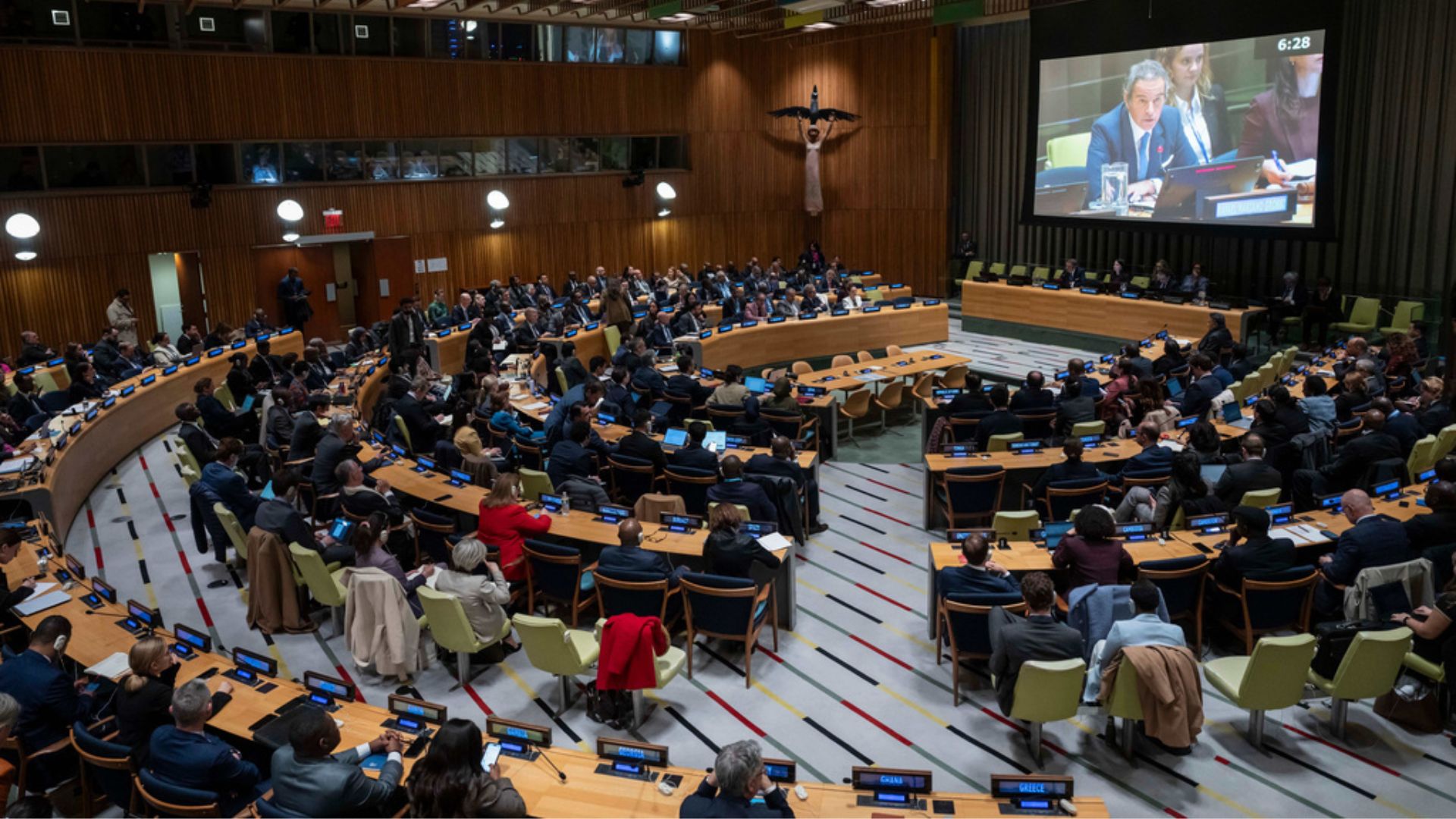
In Hans Christian Andersen's famous story, a child speaks a simple truth that everyone can see but refuses to say: the emperor has no clothes! This story helps us understand a major problem in international law today. When powerful countries invade smaller nations, the economic damage spreads far beyond the battlefield. Countries nowhere near the fighting suddenly face skyrocketing inflation, oil shortages, and stock market crashes. Yet international law has no system to compensate these innocent bystanders. This raises an important question: why can't we apply the same legal principles we use in international relationships between countries?
The tort law principle can be interpreted straightforwardly. If you harm someone through your actions, you pay compensation. For example, a factory that pollutes a river must pay farmers downstream whose crops are damaged; A careless driver who causes an accident must cover medical bills and lost wages, etc. The system doesn't always require proof of evil intentions; sometimes, just causing the harm is enough to trigger the obligation to pay. This legal framework has developed over centuries to balance personal freedom with social responsibility. It recognizes that we live in connected societies where one person's choices affect others who had no say in those decisions.
When major powers go to war, the immediate victims are obvious: the invaded country's people and infrastructure. But the economic shockwaves travel globally. Oil prices double as supply chains break and sanctions disrupt trade. A country on another continent suddenly pays twice as much for gasoline. Inflation surges because prices spike for wheat, natural gas, fertilizer, and other essential goods. A bakery raises bread prices because grain supplies are disrupted. A factory shuts down because it cannot get raw materials. Stock markets worldwide lose trillions in value, destroying retirement savings and pension funds. A retiree watches decades of savings vanish. A small business cannot get a loan because banks have stopped lending. These are real, measurable harms to real people, as concrete as a broken arm or burned house. Yet international law offers no compensation, no acknowledgment that these people are victims too.
Several reasons may explain why tort principles don't work internationally. First, international law assumes or treats nations as equals with no higher authority above them. There is no world government that can force powerful countries to pay damages. International courts can issue judgments, but they have no police force to collect money from unwilling nations. History shows this limitation clearly: When international courts have ordered powerful countries to pay, those countries simply refused, and nothing could be done about it. A tort system requires clear rules, impartial judges, and enforceable remedies. International affairs have none of these when powerful nations are involved.
Second, proving cause and effect becomes extremely complicated in global economics. When inflation rises in one country after a distant war begins, many factors contribute: domestic policies, currency changes, speculation, and war impacts. Unlike a car accident, where cause and effect are clear, international economics involves countless variables. Even if we could prove a war contributed to inflation somewhere, was that contribution big enough to justify legal liability? Was it foreseeable? These questions become nearly impossible to answer definitively.
Third, if we did establish such liability, the potential claims would be enormous and unmanageable. Every country affected by oil prices could sue. Every stock market decline could trigger compensation demands. Every business failure could seek damages. An aggressor nation might face trillions in claims from dozens of countries. This could paradoxically make the system meaningless. If you already face unlimited liability, why would additional potential costs deter you from further action?
Fourth, who would enforce such a system? International organizations lack the power to compel major nations to do anything they strongly oppose. The veto power held by major countries ensures they can block any enforcement mechanism directed at themselves.
This brings us back to the emperor's new clothes. In that story, everyone could see the emperor was naked, but social pressure kept them silent. Similarly, everyone can see that wars cause economic damage to uninvolved countries. We see their inflation rates, food shortages, and market crashes. Researchers and analysts routinely connect these outcomes to specific conflicts. Yet international law carefully avoids calling these "harms requiring compensation." Instead, we use softer language like "spillover effects" or "unfortunate consequences." We academics hold conferences about "food security" and "economic stability" while avoiding any talk of legal obligation or payment.
The honest answer is uncomfortable: despite progress in international law, powerful countries still largely do what they want. They face consequences like sanctions and isolation, but not financial liability to third parties. The international system cannot force them to pay because no enforcement mechanism exists that works against major powers without their consent. International law works only when enforced by power or accepted by consent. When a powerful nation decides the rules do not apply to them, there seems to be no higher authority to appeal to in our world.
Even if most countries agreed that aggressors should compensate all affected nations, implementing this would require unprecedented cooperation. Which countries could sue? How would damages be calculated across different economies? Who would administer the claims? These questions are not just technical; they challenge fundamental ideas about national sovereignty. Creating such a system would also require applying it consistently to all countries. This would open historical questions that no major power wants to be examined. Various powerful nations have engaged in military actions that caused widespread economic damage. Every country with significant military power has historical actions that could generate liability. This mutual vulnerability explains why no powerful state wants such a system.
The international community does try to help countries hurt by others' wars, but through assistance rather than legal obligation. This difference matters profoundly. Calling it assistance rather than compensation preserves power relationships. Receiving countries must be grateful rather than demanding, and donors decide whether and how much to give. Even if economic sanctions punish aggressors, the collected damages may not go to the victims. International lenders provide emergency funds, but these are loans that must be repaid with interest, not compensation for imposed harm. Affected nations go into debt to the weather storms they didn't create.
The child in Andersen's story did not change the emperor's behaviour by speaking up, the emperor kept walking. But the child changed everyone else by breaking the collective pretense. Once someone said the obvious truth, others could acknowledge it too. Perhaps we need similar honesty about international law. Not because it will immediately create a workable system, the obstacles are enormous, but because honestly naming the problem changes the conversation. When we call third-party economic harm what it is, damage that would be compensable in any domestic legal system, we highlight the massive gap between national and international justice. We make visible the fundamental unfairness that powerful nations can impose costs on vulnerable ones with complete impunity.
The world's economic pain following major conflicts is not just unfortunate, it's an uncompensated harm in every sense except legal recognition. That we lack mechanisms to address this doesn't make it less real or less unjust. It simply shows how far international law falls short of basic fairness principles applied routinely within countries. The international system remains one where power matters more than principle, and justice for the weak depends on the mercy of the strong rather than enforceable legal rights. The emperor still has no clothes. We seem to be waiting for enough people to admit what everyone already sees.
By Dr. Philip Wong
Deputy Director of STEAM Education and Research Centre, Lingnan University
Mr. Xiongyi Guo
Assistant Research Officer of Pan Sutong Shanghai-Hong Kong Economic Policy Research Institute, Lingnan University
The views do not necessarily reflect those of Orange News.
Cover Photo: AP
責編 | 李永康
編輯 | Lucy
編輯推薦
-
![]()
Opinion | A New Rhythm for LegCo and the Administration
Opinion | 2026-08-03 17:13 -
![]()
Opinion | Professional Ethics at the Heart of Medicine: Admission Standards and Moral Responsibility
Opinion | 2026-07-28 16:47 -
![]()
Opinion | Hong Kong’s Book Fair: Reading Still Matters
Opinion | 2026-07-28 16:47 -
![]()
Opinion | HK Is Not Over, but in the Process of Transformation
Opinion | 2026-07-28 16:47 -
![]()
Opinion | As Trust Improves, Cooperation Becomes Easier
Opinion | 2026-07-23 09:48 -
![]()
Opinion | Private Capital Helps Turn Climate Resilience Into Reality
Opinion | 2026-07-20 10:49

香港五年規劃·懶人包6|聚焦區域合作 鞏固對外開放橋樑角色

東壩破邊洲路段下月試行實施預約制度 首批名額今起開放預約
阿里折讓配股籌800億押注AI 傳獲超購近3倍 「沽空王」清倉換馬京東
食安中心關注內地甲醛白菜:將加強檢測 過往樣本未見不合格