- Opinion | Gold: A Mirror of Confidence in an Age of Uncertainty
- Opinion
- 2026-02-12 10:56
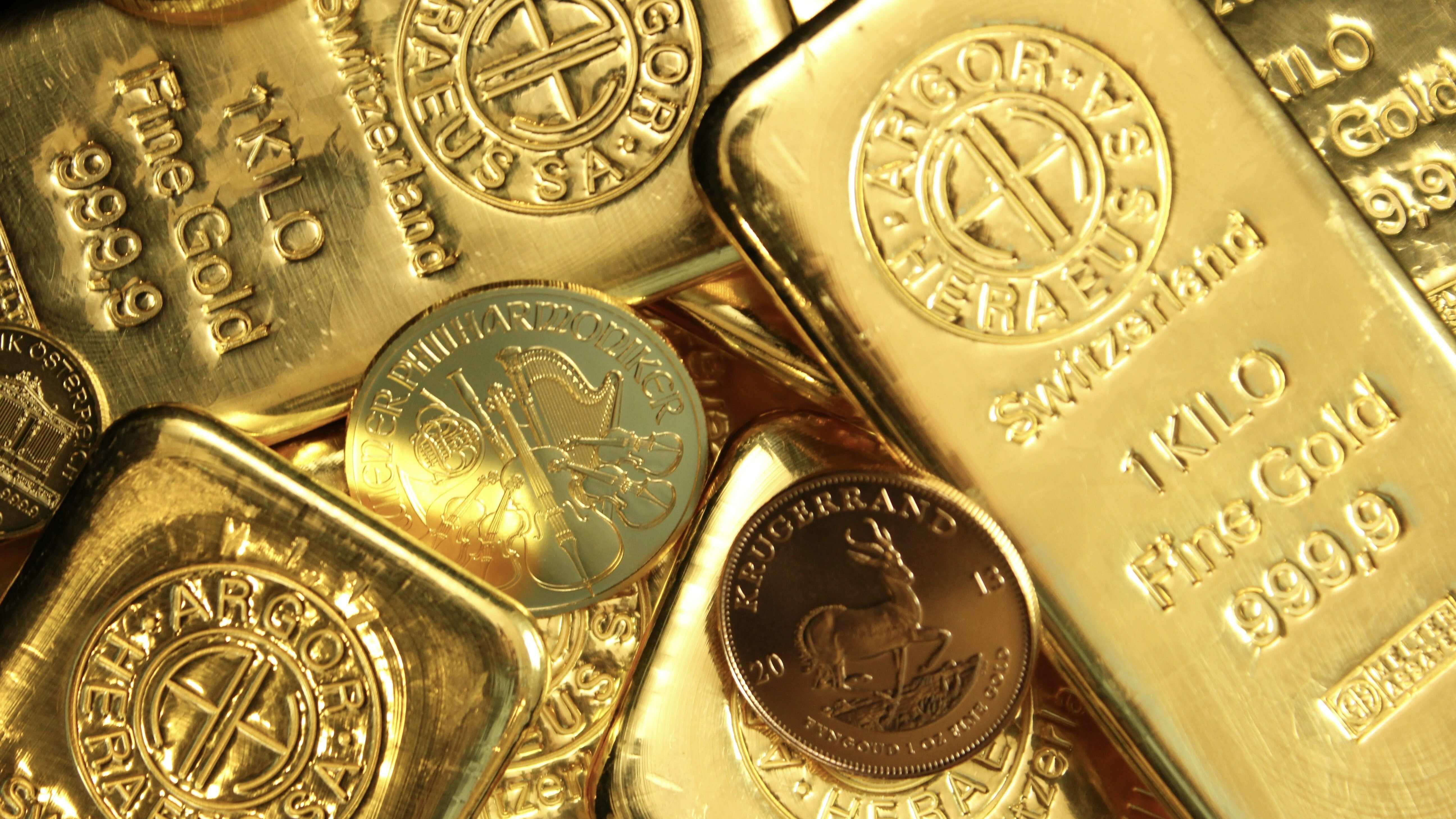
In recent months, sharp fluctuations in gold prices have once again placed the metal at the center of market debate. For some investors, gold remains a refuge against inflation; for others, it has become a speculative instrument which is riding waves of volatility. What makes this episode particularly striking is not merely the magnitude of price swings, but what they reveal beneath the surface: uncertainty over interest-rate trajectories, doubts about the controllability of inflation, and persistent anxiety surrounding geopolitics and financial stability. Though gold appears to be just another commodity, its movements in capital markets continue to carry something far heavier: collective confidence and market psychology.
Viewed through a longer historical lens, gold’s enduring role across civilizations has little to do with its ability to generate cash flow. Unlike equities, which depend on corporate profitability, bonds, which rely on borrowers’ credibility, or fiat currencies, which rest on institutional trust and fiscal authority, gold requires no issuer’s promise. Its scarcity, divisibility, and resistance to counterfeiting have allowed it to anchor consensus across vastly different monetary systems. From the gold standard to today’s credit-based regimes, gold has gradually exited everyday transactions, yet it repeatedly re-emerges when confidence in modern money falters, whether through fears of excessive issuance, currency debasement, or unforeseen systemic shocks. In this sense, dramatic shifts in gold prices rarely signal a transformation in gold itself; rather, they reflect changing attitudes toward the global order.
At the national level, gold is not merely a private hedge but also a strategic reserve asset. While its share in official reserves may appear modest, for large emerging economies and industrial powers it represents something deeper: strategic autonomy. In a world shaped by geopolitical tensions, portfolio rebalancing, and currency volatility, holding gold is a way of preserving optionality. It signals that economic security need not rely entirely on existing monetary arrangements. When global growth weakens and economies face the uneasy combination of slowing expansion and elevated prices, gold’s appeal as a store of value becomes more pronounced. It is precisely this expectation, reinforced by uncertainty and negative sentiment, that often underpins sustained upward pressure on gold prices.
In the short term, interest-rate expectations tend to act as the most immediate catalyst for gold price movements. When real interest rates are expected to rise, the opportunity cost of holding a non-yielding asset increases, prompting capital to shift toward interest-bearing instruments. Conversely, when rate cuts or declining real yields come into view, gold tends to regain support. The U.S. dollar also plays a significant, though not always straightforward, role. A stronger dollar can make dollar-denominated gold appear more expensive, yet during periods of acute stress both the dollar and gold may rise together: The former as the backbone of global liquidity and payments, the latter as a cross-system, low-counterparty-risk reserve. Meanwhile, even as headline inflation cools, the lived experience of rising living costs, policy uncertainty, and fragile supply chains keeps concerns about purchasing power alive. Geopolitical shocks and sudden crises further amplify risk premiums, giving gold its familiar pattern of sharp advances and equally rapid pullbacks.
Ultimately, gold price volatility is best understood as a quotation of the era’s anxieties. Gold itself, however, has never existed solely for the market. It serves as a psychological anchor for investors confronting uncertainty and as a pillar of economic security for nations navigating an unpredictable world. Gold does not automatically create wealth, nor should it be dismissed as unproductive. Properly understood, it occupies a unique role: Less a vehicle for growth than a safeguard of value. From this perspective, amid recent price swings, investors would do well to remain disciplined and measured, resisting the temptation to fixate solely on short-term gains or losses.
References:
Koch, L. (2026). Navigating gold’s flux: Strategic moves for a stable future. Orange News. https://www.orangenews.hk/OPINION/VAJV2AS/?utm_source=newscopy&utm_medium=referral
Liu, S., Geng, Y., Gao, Z., Li, J., & Xiao, S. (2023). Uncovering the key features of gold flows and stocks in China. Resources Policy, 82, 103584. https://doi.org/10.1016/j.resourpol.2023.103584
Dr. Philip Wong
Deputy Director of STEAM Education and Research Centre, Lingnan University
Mr. Xiongyi Guo
Assistant Research Officer of Pan Sutong Shanghai-Hong Kong Economic Policy Research Institute, Lingnan University
The views do not necessarily reflect those of Orange News.
Cover Photo: Unsplash
責編 | 李永康
編輯 | 芊芊
編輯推薦
-
![]()
Opinion | Nepal’s Tragedy Reminds Hong Kong to Guard Against Landslide Risk
Opinion | 2026-09-04 15:45 -
![]()
Opinion | Health Plan Opportunity: From Clinic Care to Community Support
Opinion | 2026-09-01 15:56 -
![]()
Opinion | From the Birth of Submarine to the Era of UUVs
Opinion | 2026-08-31 15:03 -
![]()
Opinion | Even an Extra Is an Actor: Stephen Chow and the Hong Kong We Need
Opinion | 2026-08-27 15:36 -
![]()
Opinion | Beyond Bailouts: Hongkong Post’s Real Test
Opinion | 2026-08-27 15:35 -
![]()
Opinion | Planning for Prosperity: Hong Kong’s Five-Year Start
Opinion | 2026-08-24 12:12





周末睇新聞|平陸運河首條外貿航線首艘貨船抵越南 世紀工程打通新通道

孫玉菡:料白領文職較大機會被AI取代 技能提升局將助轉型

內地知名音樂人劉歡病逝 享年63歲

國慶黃金周|警方加強打擊黑的劏客 派的士大使駐旅遊熱點