- Opinion | Why Hong Kong’s Constitutional Development Should Serve National Development
- Opinion
- 2026-02-02 17:10
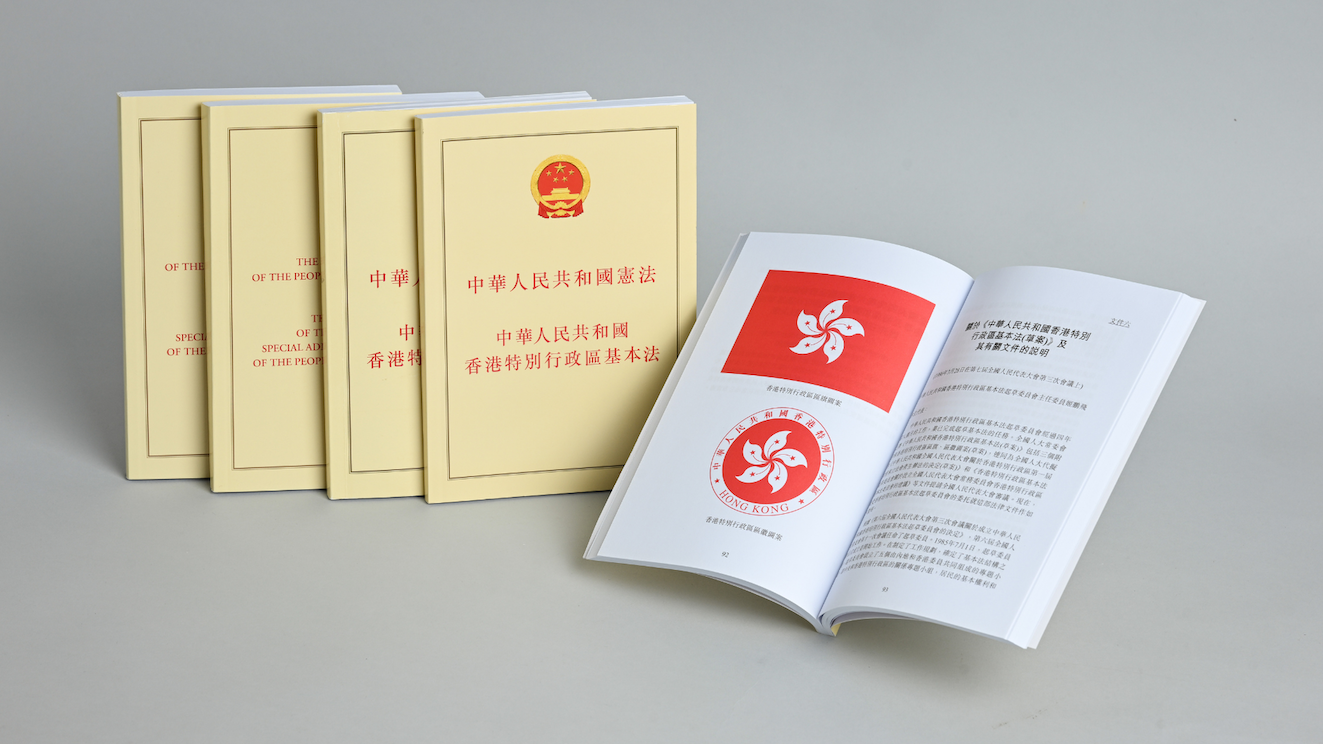
Hong Kong’s constitutional development should be understood not as an inward-looking legal exercise, but as a practical project: building institutions, interpretive principles, and governance capacity that allow the city to thrive under “One Country, Two Systems” while contributing meaningfully to the nation’s long-term strategy. If Hong Kong is to remain competitive, livable, and internationally connected, its constitutional order must evolve in a way that serves national development and, through that alignment, secures Hong Kong’s own future.
This argument is sometimes mischaracterized as choosing “development” over the rule of law. In reality, constitutional development is how a society ensures the rule of law remains effective under new conditions. A constitution that cannot support strategic governance eventually produces confusion, policy gridlock, and public frustration. Hong Kong needs stability, but stability is not the same as immobility. Stability comes from clear constitutional roles, coherent decision-making, and an interpretive approach that honors the Basic Law’s purpose: Preserving Hong Kong’s distinct system while ensuring it can function within national sovereignty and national priorities.
Recent policy direction from Chief Executive John Lee Ka-chiu illustrates why this constitutional orientation matters now. He has indicated the HKSAR Government will establish a new mechanism to comprehensively align with the country’s Five-Year Plans. With the national “15th Five-Year Plan” (十五五) outline expected to be reviewed at the upcoming “Two Sessions,” Hong Kong will, for the first time, formulate its own five-year plan built around a framework that docks with the national plan. Lee also said he would personally lead a cross-bureau, cross-department, whole-of-government task force to coordinate the work.
That is an important administrative update; and it is constitutional development in action. It reflects a maturing understanding that modern governance, especially in a complex city, cannot be delivered by siloed departments pursuing narrow mandates. When national planning increasingly covers not only finance and industry but also livelihoods and social capacity, Hong Kong’s response must be integrated and strategic. Education, healthcare, housing, and youth development are not “side issues”; they are the foundations of social confidence and long-term competitiveness. A constitutional culture that supports whole-of-government coordination strengthens, rather than weakens, the city’s ability to deliver results for residents.
Constitutional development also requires a realistic approach to interpretation. The Basic Law is a constitutional instrument with objectives as well as text. Hong Kong’s legal tradition recognizes purposive interpretation, reading provisions in light of their function. In the constitutional context, that means interpreting powers and responsibilities so the system can operate effectively, maintain order, and meet the public interest in a changing environment. This is not about arbitrary readings or eroding safeguards. It is about ensuring the constitutional framework remains capable of governing: predictable enough to earn trust, yet responsive enough to handle new policy demands, new economic opportunities, and new social expectations.
Those who insist that constitutional interpretation must be rigidly narrow often frame flexibility as a threat to autonomy. But autonomy is not an end in itself; it is a mechanism to achieve good governance, protect Hong Kong’s way of life, and maintain prosperity under Chinese sovereignty. Autonomy that cannot translate into effective delivery, more housing supply, better medical capacity, stronger education pathways, greater youth opportunity, becomes symbolic and brittle. By contrast, constitutional development that supports strategic alignment with national planning can make autonomy more valuable, because it is being used to solve real problems and capture real opportunities.
National development, in this sense, is not an abstract agenda imposed from afar. It increasingly intersects with exactly what Hong Kong people care about: livelihoods, mobility, and economic prospects. If the national plan emphasizes upgrading human capital, improving public services, and expanding new growth drivers, Hong Kong benefits directly when it positions itself early, sets measurable priorities, and coordinates implementation across the government. A Hong Kong five-year plan aligned with the “15th Five-Year Plan” can give the city a clearer policy discipline, priorities that are not reinvented each cycle, targets that can be tracked, and execution that is not derailed by bureaucratic fragmentation.
This alignment is also compatible with Hong Kong’s international role. Lee has said the government will look toward more emerging markets, with priority consideration for Eastern Europe and Central Asia, seeking “undiscovered gold mines” for Hong Kong enterprises. He pointed to trade missions to Kuwait and Qatar and noted that investment projects are beginning to materialize with substantial figures. This outward-looking approach is not a departure from national alignment; it complements it. Hong Kong’s advantage lies in being both national and international: connecting capital, expertise, and standards across borders while leveraging the scale and momentum of the mainland economy. Constitutional development should facilitate that “both-and” posture, not force a false choice between being global and being Chinese.
A constitutional system proves its worth not through slogans, but through outcomes: confidence in institutions, clarity in governance, and improvement in everyday life. If Hong Kong’s constitutional development is oriented toward enabling effective coordination with national strategy, while maintaining legal predictability, due process, and professional administration, it can reinforce public trust and strengthen the city’s long-term resilience. The alternative is a constitutional mindset that treats development as suspect and coordination as taboo, leaving Hong Kong less prepared for regional competition, technological shifts, and demographic pressures.
Hong Kong’s future will not be secured by nostalgia for a frozen moment in time. It will be secured by a constitutional order that continues to develop; faithful to the Basic Law’s purpose, confident in “One Country, Two Systems,” and capable of translating national development opportunities into local progress. In that direction, serving national development is not a sacrifice. It is one of the most practical ways to serve Hong Kong’s future.
Dr. Philip Wong
Deputy Director of STEAM Education and Research Centre, Lingnan University
Mr. Xiongyi Guo
Assistant Research Officer of Pan Sutong Shanghai-Hong Kong Economic Policy Research Institute, Lingnan University
The views do not necessarily reflect those of Orange News.
Cover photo: Information Services Department
責編 | 李永康
編輯 | Lucy
編輯推薦
-
![]()
Opinion | Nepal’s Tragedy Reminds Hong Kong to Guard Against Landslide Risk
Opinion | 2026-09-04 15:45 -
![]()
Opinion | Health Plan Opportunity: From Clinic Care to Community Support
Opinion | 2026-09-01 15:56 -
![]()
Opinion | From the Birth of Submarine to the Era of UUVs
Opinion | 2026-08-31 15:03 -
![]()
Opinion | Even an Extra Is an Actor: Stephen Chow and the Hong Kong We Need
Opinion | 2026-08-27 15:36 -
![]()
Opinion | Beyond Bailouts: Hongkong Post’s Real Test
Opinion | 2026-08-27 15:35 -
![]()
Opinion | Planning for Prosperity: Hong Kong’s Five-Year Start
Opinion | 2026-08-24 12:12



周末睇新聞|平陸運河首條外貿航線首艘貨船抵越南 世紀工程打通新通道

孫玉菡:料白領文職較大機會被AI取代 技能提升局將助轉型

內地知名音樂人劉歡病逝 享年63歲

國慶黃金周|警方加強打擊黑的劏客 派的士大使駐旅遊熱點