- Opinion | Hong Kong's Development Can't Afford Energy Blind Spots
- HK Eye
- 2026-01-07 09:23
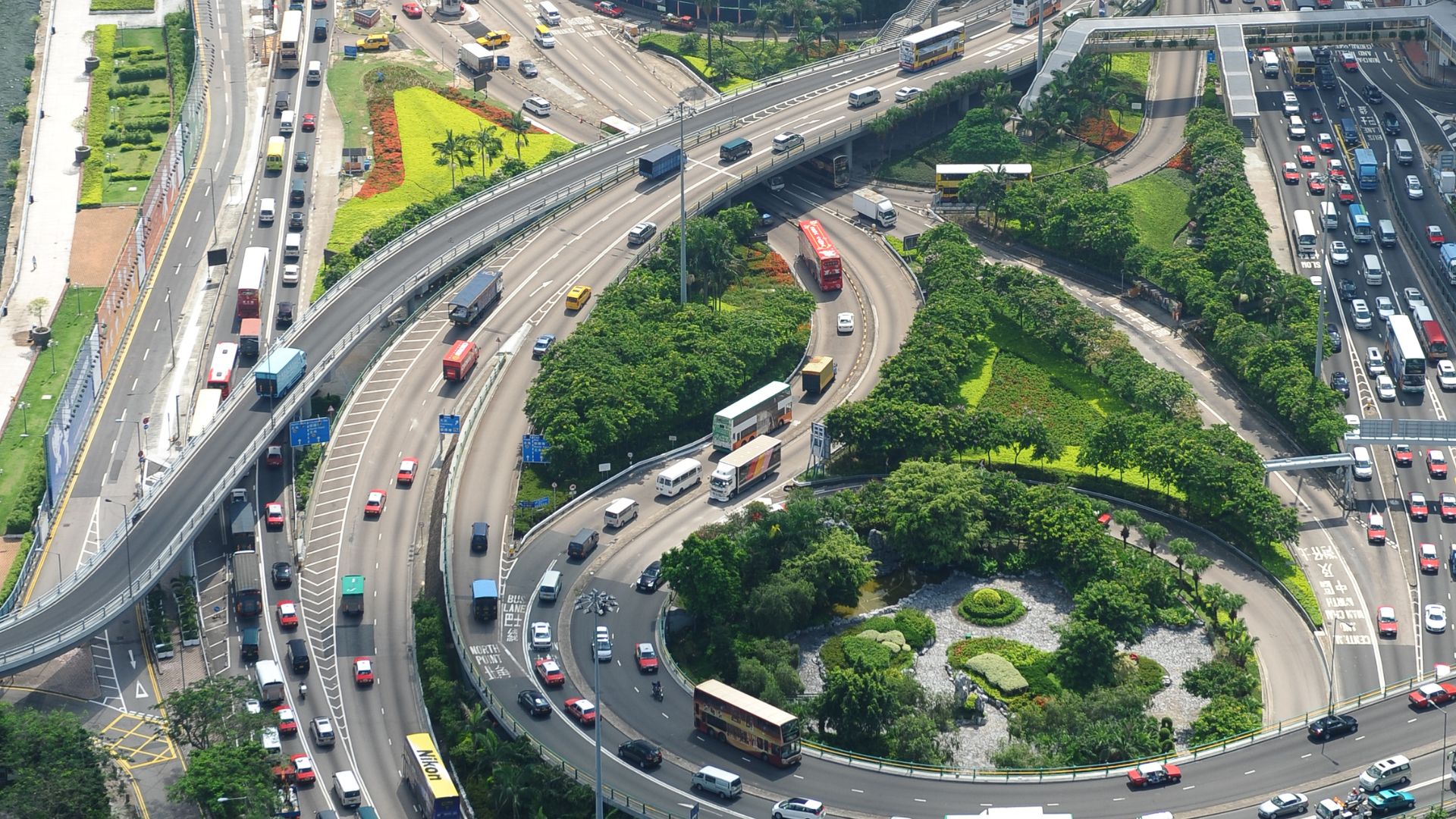
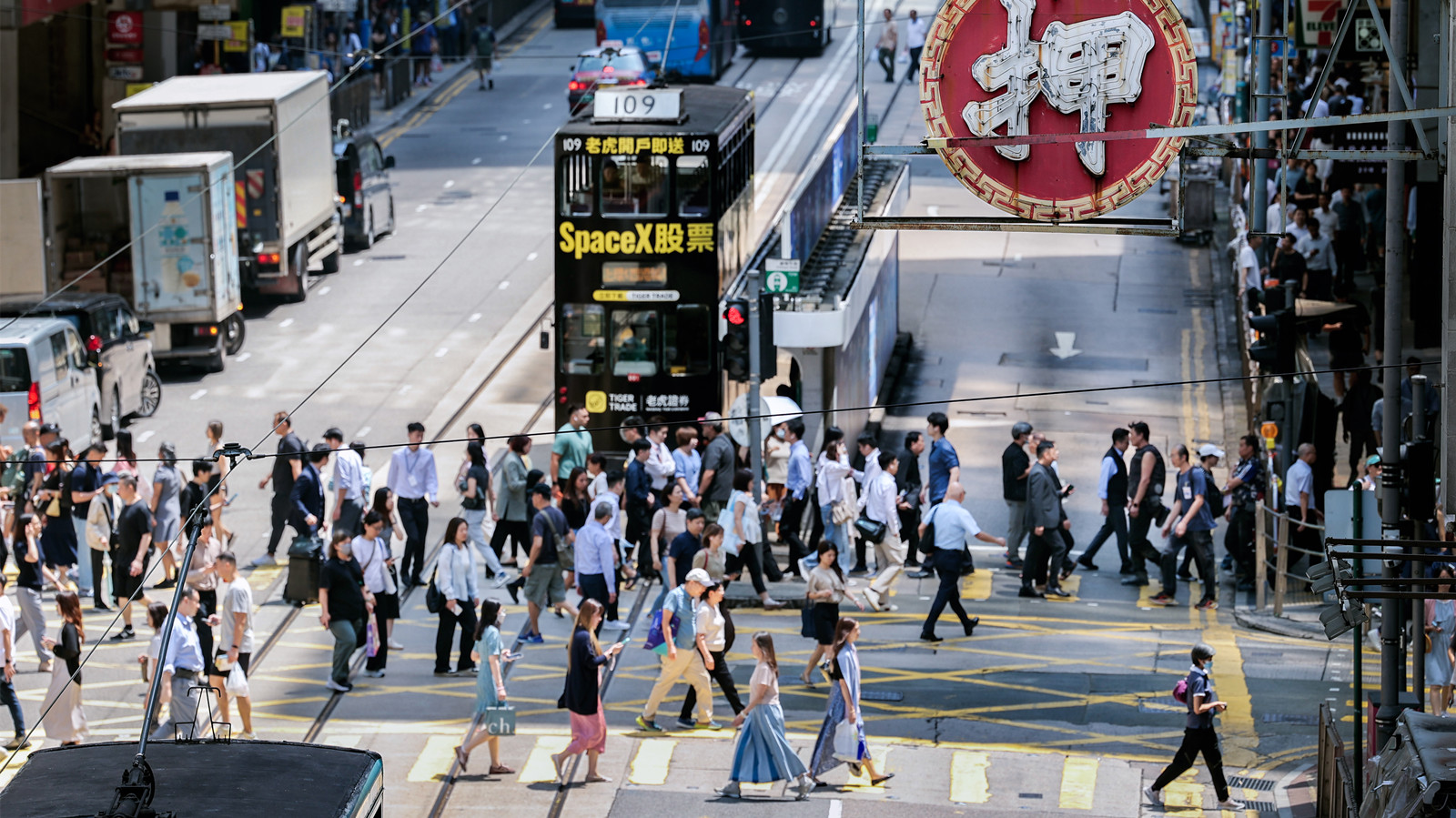
Hong Kong is entering another decisive period of city-making. Land supply, housing output, innovation districts and large infrastructure packages are back on the agenda. Yet the public debate still tends to separate "development" from "transport" and to treat energy and environmental performance as issues to be mitigated later through add-on measures. That sequence is increasingly critical. In a dense, road-constrained city that relies on reliable public transport and well-managed traffic operations, the built environment and transport system are already energy policy in practice. The question is whether we design for efficiency and lower emissions deliberately, or whether we lock in waste and then spend decades paying to correct it.
The comparative review published in the peer reviewed journal Energies by the authors: Examining Australia's Austroads guidance, Hong Kong's Transport Planning and Design Manual (TPDM), and the UK's Design Manual for Roads and Bridges (DMRB) offers a timely warning and a practical way forward. Our study's central insight is that design standards influence energy performance even when they do not declare "energy efficiency" as a primary objective. Manuals shape outcomes through direct mechanisms, such as signal coordination and managed operations that reduce stop–start traffic; indirect mechanisms, such as safety and accessibility provisions that affect speed consistency, mode choice, and reliability; and emergent mechanisms, such as electrification readiness and AI-enabled operations that are expanding through pilots and supplementary policies. For Hong Kong, the review finds a real strength: TPDM most strongly supports urban operational efficiency, especially through coordinated and adaptive signal control and public-transport prioritization in dense networks. That is exactly where a high-density city can win the largest, fastest energy savings. But the same evidence also implies a gap: when energy and carbon outcomes are mostly implicit, they are hard to audit, hard to defend during value engineering, and hard to improve systematically across districts and projects.
This is why Hong Kong should treat the next review of its transport and street-design governance as a strategic opportunity. The case is not for rewriting technical standards into climate manifestos, and certainly not for slowing delivery. The case is for making energy and environmental performance explicit, measurable, and governable across the life cycle: planning, design, operations, and maintenance, therefore the city's development program does not accidentally entrench higher energy demand. Put simply, the built environment determines travel distances and mode choice; junction design and corridor geometry determine how much braking, idling, and unstable flow we tolerate every day; and operational systems determine whether networks perform as designed or deteriorate into chronic delay. In a city where small inefficiencies scale into territory-wide time loss, fuel or electricity waste, and avoidable emissions, this is not an abstract sustainability argument, it is a core productivity and public-health issue.
One lesson from the UK comparison is especially relevant. The DMRB has increasingly institutionalized whole-life governance through formal assessment requirements that capture carbon and environmental impacts over time. The implication for Hong Kong is not that we should copy the UK's strategic road focus, but that we should strengthen our own accountability loop. Major projects and meaningful upgrades should be required to report a short set of comparable indicators that connect design choices to real-world energy outcomes. These do not have to be complicated. Our research review points to operational proxies already familiar to transport professionals: delay, speed variability, stop rates, queueing and spillback frequency, and to whole-life proxies such as materials intensity and maintenance frequency. If these indicators are embedded in submissions and paired with a post-implementation check after opening, government can answer the question that currently too often goes unasked: Did this scheme reduce energy-wasting conditions, or did it simply move them?
The review also makes clear where Hong Kong already holds a strong advantage: day-to-day operational management. Adaptive and coordinated signals, transit priority, and corridor circulation schemes are among the most cost-effective tools for reducing idle time and smoothing flow. The problem is that "smart" operations are only as good as their data governance and maintenance discipline. Detection that is not calibrated, signal plans that are not periodically re-optimized, and priority logic that is not monitored can quietly erode performance until congestion becomes normalized. A modern approach should therefore embed not only the technology choices, but also the operational obligations: minimum standards for interoperability, data quality, calibration, and ongoing performance review. The paper's proposed "retro-commissioning" concept: periodic diagnosis and re-optimization of existing corridor assets and control settings, fits Hong Kong particularly well because it focuses on extracting value from constrained street space without relying solely on capital-intensive widening or reconstruction. It is the kind of practice that turns digital operations from a procurement item into a continuous efficiency program.
Electrification readiness should be treated in the same pragmatic way. Hong Kong is moving toward more electric buses, taxis, logistics fleets, and private vehicles. But electrification does not automatically deliver efficiency if the built environment and facilities are not ready. Poor interchange layouts, inefficient circulation, unmanaged queues, and inadequate power planning can create new forms of energy waste even with zero-tailpipe vehicles. Our review paper notes that Hong Kong's framework, including TPDM and supplementary policies, already points toward facility-level energy efficiency, such as better public transport interchange design, lighting and ventilation efficiency, and power provision for charging. The next step is to consolidate these expectations into clearer requirements so that readiness is consistent across projects, rather than dependent on the priorities of individual teams or the budget headroom of a particular scheme.
The most useful proposal in the attached review is not a single technology, but a governance method: an AI-enabled benchmarking overlay that links manual provisions to comparable energy and carbon indicators while keeping existing compliance structures intact. For Hong Kong, this approach is attractive because it avoids a false choice between stability and reform. Designers and operators can continue to work within familiar processes, but government gains a consistent way to compare outcomes, identify omissions and inconsistencies, and prioritize revisions and investments based on evidence rather than anecdotes. In practice, that means treating standards as living inputs to a learning system: codified requirements remain, but performance data informs what should be strengthened, clarified, or retired over time.
None of this is an argument against development. It is an argument against expensive regret. When energy performance is not embedded into standards and approvals, we pay later through chronic congestion, operational underperformance, retrofit costs, and avoidable environmental and health impacts. The point is to shift the mindset from mitigation to design intent: if Hong Kong is serious about high-quality development, it should ensure that transport and built-environment decisions are screened and optimized for energy and environmental performance from the start. The evidence in the comparative study suggests Hong Kong has a strong base in operational efficiency. The next move is to make that strength auditable, scalable, and future-proof by updating governance so that energy and environmental outcomes are designed in, measured, and continuously improved.
Reference
Wong, P. Y. L., Leung, T. M., Zhang, W., Lo, K. C. C., Guo, X., & Hu, T. (2026). Enhancing Energy Efficiency in Road Transport Systems: A Comparative Study of Australia, Hong Kong and the UK. Energies, 19(1), 266. https://doi.org/10.3390/en19010266
By Dr. Philip Wong
Deputy Director of STEAM Education and Research Centre, Lingnan University
Mr. Kinson Lo
Project Officer of STEAM Education and Research Centre, Lingnan University
Mr. Xiongyi Guo
Assistant Research Officer of Pan Sutong Shanghai-Hong Kong Economic Policy Research Institute, Lingnan University
The authors are current affairs commentators.
The views do not necessarily reflect those of Orange News.
Cover Photo: Information Services Department
責編 | 李永康
編輯 | Lucy
編輯推薦
-
![]()
Why Jingdezhen Matters Far Beyond China
HK Eye | 2026-07-31 14:38 -
![]()
Tang Fei: A Study Tour to Beijing Broadens Vision: Charting a New Path for Hong Kong Education from a National Perspective
HK Eye | 2026-07-25 17:57 -
![]()
CUHK Medical Centre receives donation of precious paintings from renowned Hong Kong Lingnan artist Professor Ng Yuet-lau
HK Eye | 2026-07-17 18:30 -
![]()
Grenville Cross: Starmer leaves UK less safe and more vulnerable
HK Eye | 2026-06-26 18:02 -
![]()
The WestK Cabaret Festival Concludes as a Historic First for Hong Kong
HK Eye | 2026-06-12 16:27 -
![]()
I Grenville Cross SC: Hong Kong's public interest law focuses on advancing justice and the public good
HK Eye | 2026-05-15 11:06




周末睇新聞|平陸運河首條外貿航線首艘貨船抵越南 世紀工程打通新通道
孫玉菡:料白領文職較大機會被AI取代 技能提升局將助轉型

內地知名音樂人劉歡病逝 享年63歲
國慶黃金周|警方加強打擊黑的劏客 派的士大使駐旅遊熱點