- Opinion | Hong Kong People: Being Squeezed, or Not—Our Holiday Choice, and Why Staying in Hong Kong Can Be Just as Good
- Opinion
- 2026-01-02 12:18
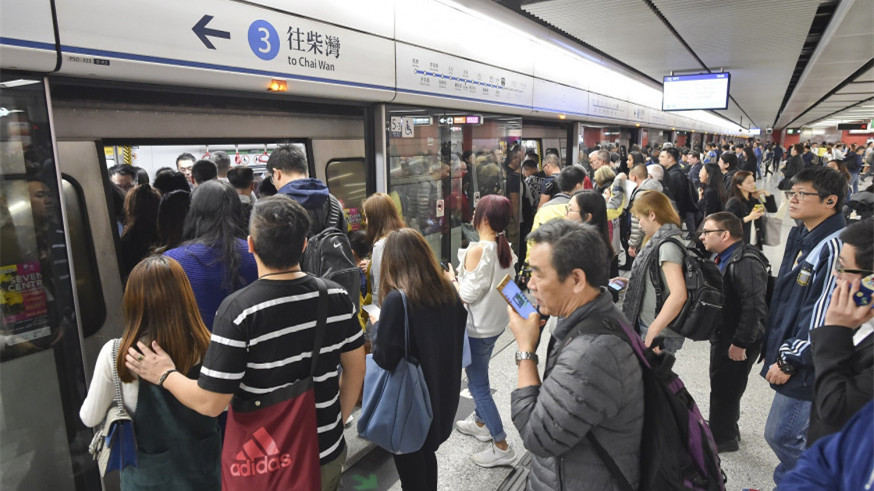
As we begin 2026, we wish all readers a peaceful and fulfilling New Year. With the holiday season prompting reflection on travel, cities, and everyday comfort, the following observations offer a timely perspective on how we move and why staying in Hong Kong can be just as rewarding.
This Christmas, many Hong Kong residents were travelling abroad for a short break, and Japan remains one of the most popular choices. It is close, convenient, and widely seen as efficient and well-run. Yet a lunchtime chat with colleagues brought up an experience that genuinely surprised some of us: Tokyo’s urban rail, despite its reputation for precision, can be famously overcrowded during peak hours. On certain lines and at certain times, the crowding is not just “busy” but physically compressive: People are pressed shoulder to shoulder, and boarding can look like a controlled squeeze. For visitors, that first encounter can be shocking, and it is understandable that many people, especially women, feel uneasy when personal space is reduced to almost nothing.
It is tempting to explain this only as a matter of culture: Why people seem not to complain openly? But from a traffic engineering perspective, extreme crowding is usually the predictable outcome of extreme peak demand meeting hard capacity limits. A simple way to express the “ceiling” of a rail corridor is the peak directional passenger capacity:
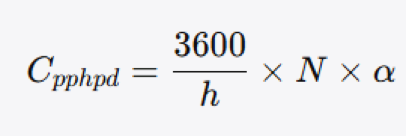
where
That is why solutions, if discussed seriously, should be framed as engineering trade-offs rather than slogans. One approach is to raise throughput by reducing h: higher service frequency through advanced signalling, better turnback operations at terminals, and station practices that shorten dwell time and spread boarding more evenly along the platform. Another approach is to raise N: more usable capacity per train, by adding cars where platforms allow, improving internal layout, and upgrading power and depots, but bigger trains do not help much if the bottleneck is door flow and dwell time. A third approach is to reduce the sharpness of the peak so that D is lower exactly when it matters: staggered working hours, flexible schedules, and incentives that flatten demand can deliver surprisingly large comfort gains, because even a small reduction near the capacity ceiling can move a line from “crush” back to “manageable.” Colleagues also mentioned double-deck trains like those used in Sydney, which is an interesting idea in the abstract, but it requires caution: double-deck rolling stock may increase capacity, yet it can also slow passenger exchange because stairs concentrate flows, increasing dwell time and effectively worsening α on very high-frequency urban corridors. Whether it helps depends on what truly constrains the line—headway, dwell time, station circulation, or train length—and those constraints differ by corridor and by city.
As for why Tokyo commuters appear to “tolerate” it, engineering offers part of the answer too. When crowding is predictable and the service is reliable, people adapt through learned behaviour: which car to board, where to stand, which station entrance to use, and what time to depart. The absence of loud complaint does not necessarily mean the experience is pleasant; it can also mean expectations have adjusted and social norms favour quiet endurance. But for a modern city, the benchmark should not be how much discomfort passengers can withstand, particularly women who may face additional anxieties in dense spaces. The benchmark should be whether the system is designed and managed to protect safety, dignity, and a reasonable level of comfort while still moving the city efficiently.
For Hong Kong people planning the holiday “escape,” there is also a practical reflection closer to home. Hong Kong has world-class transport, dense neighbourhoods with short trip lengths, and an ever-improving mix of waterfront spaces, hiking trails, festivals, and local districts that can feel new when we slow down and explore them properly. A “good holiday” does not always require a boarding pass; sometimes it is simply choosing a city that works—and enjoying it when the rest of the world is queuing. In that sense, staying in Hong Kong can be just as good: less transit uncertainty, more time for family, and comfort that does not depend on squeezing into someone else’s peak-hour reality.
And after hearing all this, I can only conclude with a personal, light-hearted observation: whatever Tokyo’s peak-hour “sardine mode” teaches us about capacity, I still find China’s high-speed rail much more comfortable—at least on those trains, the only thing squeezing me is my schedule.
Reference:
1. Vuchic, V. R. (2005), Urban Transit: Operations, Planning, and Economics
By Dr. Philip Wong
Deputy Director of STEAM Education and Research Centre, Lingnan University
Mr. Kinson Lo
Project Officer of STEAM Education and Research Centre, Lingnan University
The views do not necessarily reflect those of Orange News.
Cover Photo: File Photo
責編 | 李永康
編輯 | Liah
編輯推薦
-
![]()
Opinion | Nepal’s Tragedy Reminds Hong Kong to Guard Against Landslide Risk
Opinion | 2026-09-04 15:45 -
![]()
Opinion | Health Plan Opportunity: From Clinic Care to Community Support
Opinion | 2026-09-01 15:56 -
![]()
Opinion | From the Birth of Submarine to the Era of UUVs
Opinion | 2026-08-31 15:03 -
![]()
Opinion | Even an Extra Is an Actor: Stephen Chow and the Hong Kong We Need
Opinion | 2026-08-27 15:36 -
![]()
Opinion | Beyond Bailouts: Hongkong Post’s Real Test
Opinion | 2026-08-27 15:35 -
![]()
Opinion | Planning for Prosperity: Hong Kong’s Five-Year Start
Opinion | 2026-08-24 12:12

周末睇新聞|平陸運河首條外貿航線首艘貨船抵越南 世紀工程打通新通道
孫玉菡:料白領文職較大機會被AI取代 技能提升局將助轉型

內地知名音樂人劉歡病逝 享年63歲
國慶黃金周|警方加強打擊黑的劏客 派的士大使駐旅遊熱點