- Opinion | Rethinking Voting: Civic Duty or Personal Choice?
- Opinion
- 2025-11-03 14:24
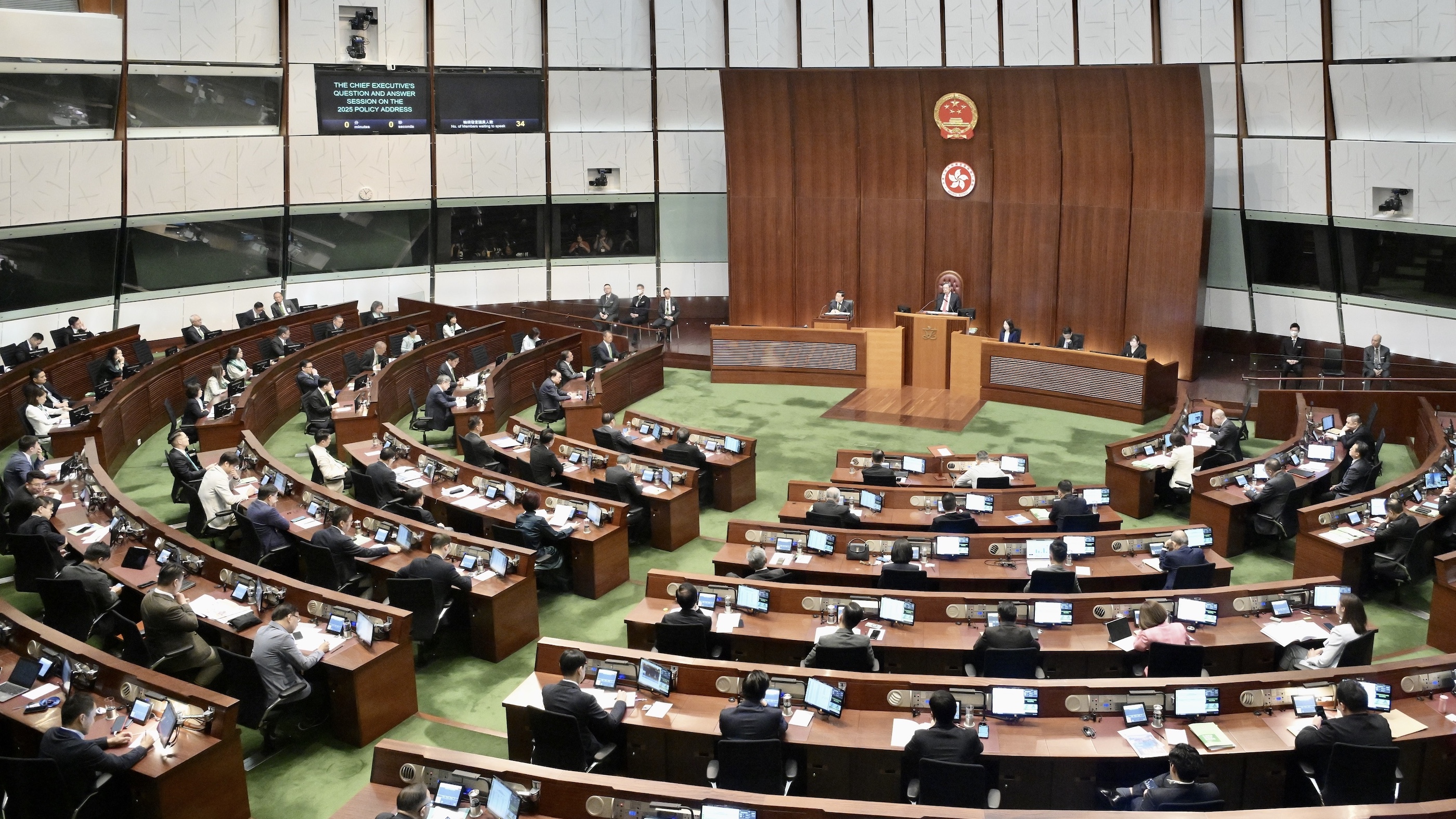
Voting lies at the core of modern representative governance, symbolizing citizens’ participation in shaping public policy and selecting political leadership. Yet, across different jurisdictions, the meaning and obligation of voting vary considerably. In some countries, such as Australia, casting a vote is regarded as a civic duty backed by legal enforcement. In Hong Kong, voting remains an individual choice, encouraged but not compulsory. The upcoming Legislative Council election in Hong Kong once again highlights this question: Should voting be considered a civic responsibility integral to citizenship, or should it remain an optional act of political expression?
From an institutional perspective, Hong Kong and Australia both operate under a common law tradition, share a fundamental commitment to public participation but differ in scale and their philosophical approaches. In Australia, compulsory voting has been in place since 1924, founded on the principle that voting is both a right and a duty that ensures the local legitimacy and representativeness of democratic rule. Every eligible voter is required by law to attend a polling station, submit a ballot, and participate in the collective decision-making process. Failure to vote without a valid excuse can result in monetary fines. This system, while sometimes criticized for limiting individual autonomy, has been largely successful in maintaining exceptionally high voter turnout, often nearly 90%. It reinforces the idea that political participation is a core element of citizenship, a shared social obligation comparable to paying taxes or serving on a jury.
Hong Kong’s electoral system, in contrast, emphasizes voluntary participation within a well-structured and highly efficient institutional framework. The system allows citizens to decide freely whether to vote, reflecting respect for individual autonomy and recognition of Hong Kong’s diverse political culture. The improved electoral arrangements introduced in recent years, anchored in the principle of “patriots governing Hong Kong”, have strengthened political stability and enhanced governance effectiveness. Designed to ensure balanced representation from different sectors of society, the framework integrates professional, geographical, and national interests within the Legislative Council. Meanwhile, the government has modernized the voting process, making it more transparent, convenient, and secure. Polling stations are widely distributed across districts, supported by extended operating hours, streamlined verification procedures, and accessibility measures to facilitate participation. This approach raises an intriguing normative question: If it is considered a civic duty to serve as a juror in court, an obligation that upholds the integrity of the rule of law, why is casting a vote in an election treated as a matter of personal choice? Both acts serve the public interest and contribute to the legitimacy of governance, one is legally compulsory while the other remains voluntary. This contrast invites further reflection: Should casting a vote, like jury service, be made compulsory in Hong Kong?
The distinction reveals an important aspect of Hong Kong’s political philosophy. While the city firmly upholds the collective good through the rule of law, it respects individual autonomy in the political sphere. Compulsory jury service is justified as essential to the impartial administration of justice, whereas voluntary voting reflects a belief that genuine civic participation stems from free choice rather than legal compulsion. Voting in Hong Kong is conceived not as a legal duty imposed by law, but as a voluntary expression of civic responsibility.
The question of whether voting should be mandatory or voluntary must be examined considering differing sociopolitical contexts. Australia’s system assumes that political legitimacy depends upon high voter turnout and therefore uses compulsion as a mechanism to secure inclusiveness. The Australian experience suggests that mandatory voting may help moderate extremism: when most citizens participate, the electorate tends to be more representative of the general population rather than dominated by politically active minorities. It also encourages citizens to remain informed and engaged, reducing political apathy. However, critics of compulsory voting argue that enforced participation may undermine the authenticity of political expression, as many voters may cast uninformed or indifferent ballots simply to comply with legal requirements. In that sense, high turnout does not necessarily equate to meaningful engagement.
Hong Kong’s system, on the other hand, reflects a more pragmatic understanding of political participation under the “One Country, Two Systems” framework. By making voting an option rather than a legal obligation, Hong Kong’s approach emphasizes civic freedom and social harmony. The government’s role is to create conditions that facilitate participation, efficient logistics, transparent procedures, and nonpartisan voting environments, rather than to compel participation through penalties. This model respects individual choice while promoting a sense of voluntary civic responsibility. Moreover, Hong Kong’s governance framework already guarantees political stability and policy continuity through a balanced institutional design in which legislative, administrative, and executive functions are clearly delineated. Thus, the SAR government values both the expression of public participation through voter turnout and the foundations of effective governance, performance, competence, and faithful adherence to the constitutional order.
From a normative standpoint, it can be argued that voluntary voting, as practiced in Hong Kong, aligns more closely with the principles of pluralism and individual agency. Civic virtue, when exercised voluntarily, tends to be more genuine and sustainable. Encouraging rather than mandating participation allows citizens to engage based on conviction rather than obligation. This approach also fits Hong Kong’s social realities, where diversity of opinion and a pragmatic approach to politics coexist within a complex international and national context. The government’s ongoing efforts to strengthen the electoral process, through digital tools (e.g., Electronic Poll Register), voter education, and enhanced accountability, show that participation and efficiency can be achieved without coercion.
At the same time, lessons from Australia’s experience remain instructive. Compulsory voting implies the collective dimension of democracy: citizenship is not only about rights but also about duties. By ensuring universal participation, it mitigates inequality in political representation and reinforces the notion of shared responsibility for public outcomes. If participation rates in Hong Kong remain low, public policy discussions may risk being shaped by a smaller number of highly active voices, potentially narrowing the range of societal input. Hence, while compulsory voting may not fit Hong Kong’s current constitutional framework, fostering a culture of civic participation, one that views voting as a moral if not legal obligation, could enhance the legitimacy and inclusiveness of governance.
Ultimately, the question of whether voting should be an obligation or an option depends on the values each society prioritizes. Australia’s model stresses equality through collective responsibility; Hong Kong’s emphasizes harmony and freedom through individual choice within an orderly and stable system. Both approaches illustrate different ways to balance civic duty and personal liberty. In Hong Kong’s case, the ongoing development of its electoral system offers a path that combines efficiency, accessibility, and integrity with respect for autonomy, a system that reflects the city’s unique identity under “One Country, Two Systems.”
In conclusion, voting in Hong Kong should continue to be viewed as both a right and a moral responsibility rather than a legal duty. The government’s improved electoral framework provides a fair and transparent platform that invites participation without coercion. Citizens may choose whether to vote, but regardless of their decision, the system ensures that governance remains efficient, representative, and stable. As Hong Kong continues its journey “from stability to prosperity,” a culture of voluntary civic engagement, anchored in informed choice and social responsibility, represents the most appropriate path forward for a more modern, confident, and open society.
By Dr. Philip Wong
Deputy Director of STEAM Education and Research Centre, Lingnan University
Mr. Xiongyi Guo
Assistant Research Officer of Pan Sutong Shanghai-Hong Kong Economic Policy Research Institute, Lingnan University
The views do not necessarily reflect those of Orange News.
Cover Photo: Information Services Department
責編 | 李永康
編輯 | Gloria
編輯推薦
-
![]()
Opinion | Nepal’s Tragedy Reminds Hong Kong to Guard Against Landslide Risk
Opinion | 2026-09-04 15:45 -
![]()
Opinion | Health Plan Opportunity: From Clinic Care to Community Support
Opinion | 2026-09-01 15:56 -
![]()
Opinion | From the Birth of Submarine to the Era of UUVs
Opinion | 2026-08-31 15:03 -
![]()
Opinion | Even an Extra Is an Actor: Stephen Chow and the Hong Kong We Need
Opinion | 2026-08-27 15:36 -
![]()
Opinion | Beyond Bailouts: Hongkong Post’s Real Test
Opinion | 2026-08-27 15:35 -
![]()
Opinion | Planning for Prosperity: Hong Kong’s Five-Year Start
Opinion | 2026-08-24 12:12





周末睇新聞|平陸運河首條外貿航線首艘貨船抵越南 世紀工程打通新通道

孫玉菡:料白領文職較大機會被AI取代 技能提升局將助轉型
國慶黃金周|警方加強打擊黑的劏客 派的士大使駐旅遊熱點

馬鞍山麥當勞少女疑不滿服務態度潑水掟食物 女職員頭暈不適送院