- Opinion | Yang Chen-Ning: A Legacy of Science, Philosophy, and Metaphysics
- OPINION
- 2025-10-27 07:54
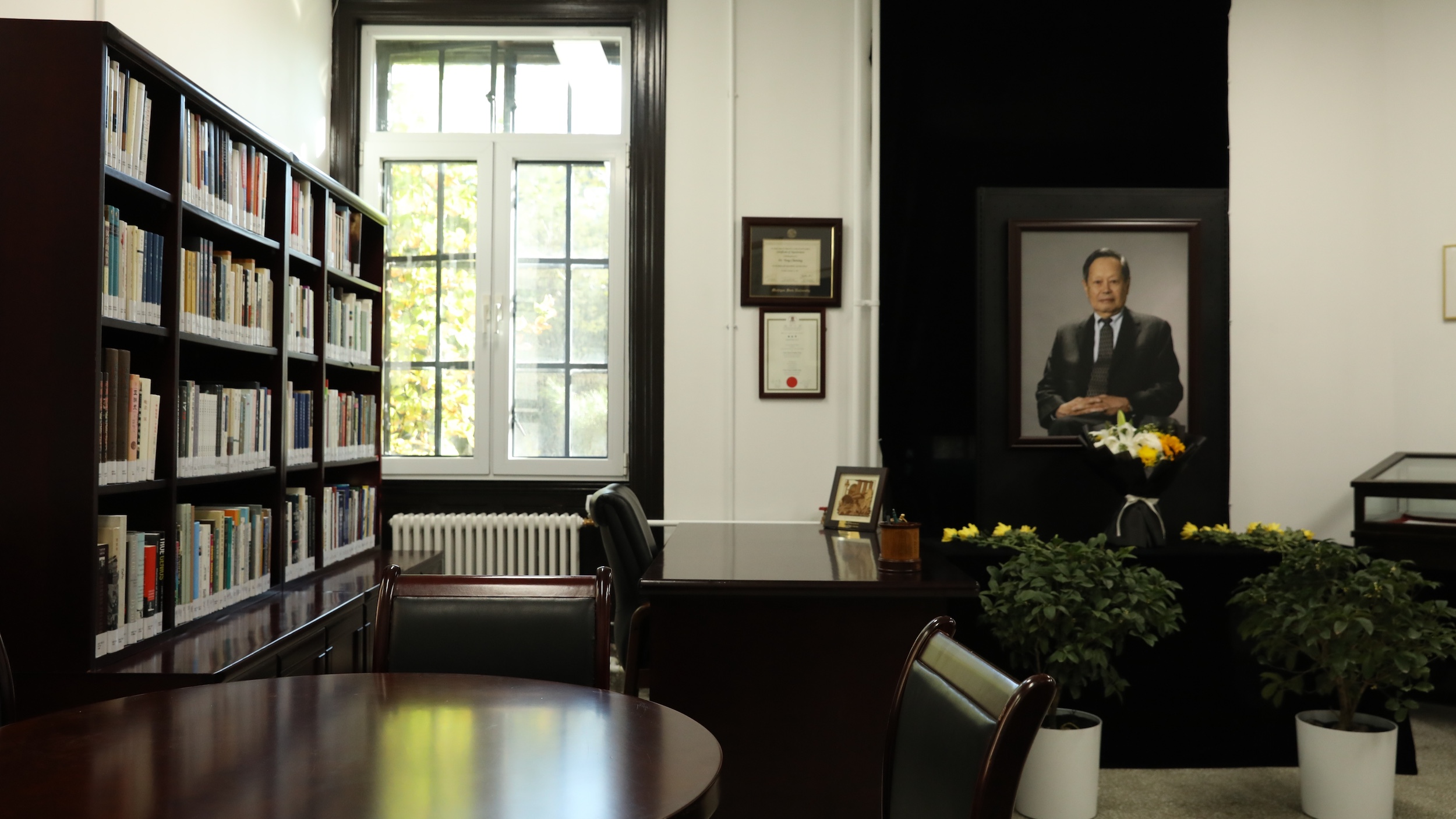
The passing of Professor Yang Chen-Ning does not merely mark the conclusion of a remarkable life dedicated to physics. Instead, it serves as a profound opportunity to reflect on the enduring relationship between science, philosophy, and metaphysics. Yang’s extraordinary contributions to theoretical physics, particularly the groundbreaking Yang-Mills theory, revolutionized our understanding of the universe. However, his legacy extends far beyond the technical brilliance of his discoveries. It exemplifies the intellectual curiosity and philosophical inquiry that lie at the very core of humanity’s timeless quest to comprehend the nature of reality.
As someone who studied metaphysics during my philosophy degree, I can attest to the profound challenges and rewards of this field. Metaphysics forces us to grapple with questions that seem both abstract and urgent: What is the nature of reality? What does it mean for something to exist? What are the fundamental principles that underlie the universe? These are the questions that theoretical physics, in its own way, also seeks to address. For me, metaphysics was both daunting and fascinating, a field that required deep reflection and intellectual rigor. It taught me to question assumptions, explore possibilities, and confront the profound mysteries of existence—an outlook that resonates deeply with Yang’s approach to science.
Metaphysics, though often seen as abstract or speculative, is essential for understanding the foundations of science itself. Physics, for instance, operates on certain metaphysical presuppositions—beliefs about the existence of objective reality, the consistency of natural laws, and the intelligibility of the universe. Yang’s work, particularly his exploration of symmetry and gauge theory, not only advanced physics but also illuminated these deeper philosophical questions. Symmetry in physics is not just a mathematical tool; it reflects an intrinsic order in the universe. From a metaphysical perspective, this raises profound questions: Why does the universe exhibit such elegant order? Why do its fundamental laws adhere to principles of symmetry and beauty? These are questions that physics describes but cannot fully explain, leaving metaphysics to probe their deeper significance.
Yang’s achievements remind us that science and metaphysics are not separate domains but deeply interconnected. Historically, many great physicists: Newton, Einstein, Schrödinger who engaged with metaphysical ideas, recognizing that their discoveries had profound implications for our understanding of reality. Quantum mechanics, for instance, forced us to rethink classical notions of determinism and objective reality, challenging the metaphysical frameworks that had guided science for centuries. Similarly, Yang’s contributions to gauge symmetry enriched not only our understanding of fundamental forces but also our metaphysical conception of the universe’s structure. His work demonstrated that science, at its best, is not just about technical problem-solving but also about uncovering the deeper truths of existence.
Reflecting on my own experience with metaphysics, I recall how challenging it was to bridge abstract philosophical concepts with tangible realities. Yet, this difficulty also made it deeply rewarding. It fostered a sense of intellectual humility and curiosity, qualities that Yang himself exemplified throughout his life. His ability to combine rigorous scientific methods with philosophical reflection is a testament to the power of interdisciplinary thinking. Yang’s legacy reminds us that true understanding requires more than technical expertise—it demands a willingness to explore the philosophical and metaphysical dimensions of knowledge.
In today’s world, the relationship between science and metaphysics is often overlooked, particularly in education. When I studied physics in my youth, the focus was overwhelmingly on technical skills and exam preparation, with little attention paid to the lives and ideas of the great thinkers behind the theories. This narrow approach risks neglecting the broader intellectual and philosophical context that inspires scientific discovery. Yang’s life and work underscore the importance of integrating these perspectives, of seeing science not just as a set of tools but as a profound philosophical endeavour.
Metaphysics, in particular, plays a vital role in shaping the questions scientists ask. Before experimentation or theory-building, there is curiosity—a sense of wonder about why the universe behaves as it does. This curiosity often stems from metaphysical inquiry: Why is there something rather than nothing? What is the nature of causality? Yang’s work was driven by this kind of metaphysical wonder, a desire to understand the universe at its most fundamental level. His exploration of symmetry and structure was not just a scientific pursuit but a metaphysical one, an attempt to uncover the principles that govern existence itself.
As we honour Yang Chen-Ning’s legacy, we should strive to embrace the integrative approach he embodied. Let us encourage future generations of scientists and philosophers to engage not only with the technical aspects of their fields but also with the profound metaphysical questions that underpin them. By doing so, we ensure that Yang’s spirit of curiosity, wonder, and intellectual rigor continues to inspire us all. His life serves as a powerful reminder that science and metaphysics, far from being separate, are two sides of the same coin, each enriching and deepening the other in our search for truth.
By Dr. Philip Wong
Deputy Director of STEAM Education and Research Centre, Lingnan University
Mr. Xiongyi Guo
Assistant Research Officer of Pan Sutong Shanghai-Hong Kong Economic Policy Research Institute, Lingnan University
The views do not necessarily reflect those of Orange News.
Cover Photo: CNS
責編 | 李永康
編輯 | Gloria
編輯推薦
-
![]()
Opinion | Graduates must master AI and soft skills to navigate shrinking job market
OPINION | 2026-04-20 14:11 -
![]()
Opinion | Subsidies Should Cushion Prices, Not Fuel Profits
OPINION | 2026-04-16 17:51 -
![]()
Opinion | When Emotions Override Satisfaction: A Behavioural Economics Perspective on Customer Decision-Making
OPINION | 2026-04-16 17:50 -
![]()
Opinion | Stablecoin Licensing in Hong Kong: Caution as Strategy
OPINION | 2026-04-13 16:38 -
![]()
Opinion | From Volume to Value: Hong Kong’s Tourism Shift
OPINION | 2026-04-10 17:39 -
![]()
Opinion | Labour says it stands for working people. So why are working people left to carry the cost?
OPINION | 2026-04-08 11:35







調解周下周一起舉行 林定國:實體及線上會議共逾千人報名參加

黃偉綸:有信心宏志閣有足夠業主出售業權 料「彈弓手」改變意願不多

特朗普宣布歐盟汽車關稅下周增至25% 歐盟批美方多次違反協議

讀歷史|鄒逸麟:近200萬平方千米領土被割去屬世界歷史罕見