- Opinion|Solving Hong Kong’s housing affordability problem
- OPINION
- 2022-07-28 12:51
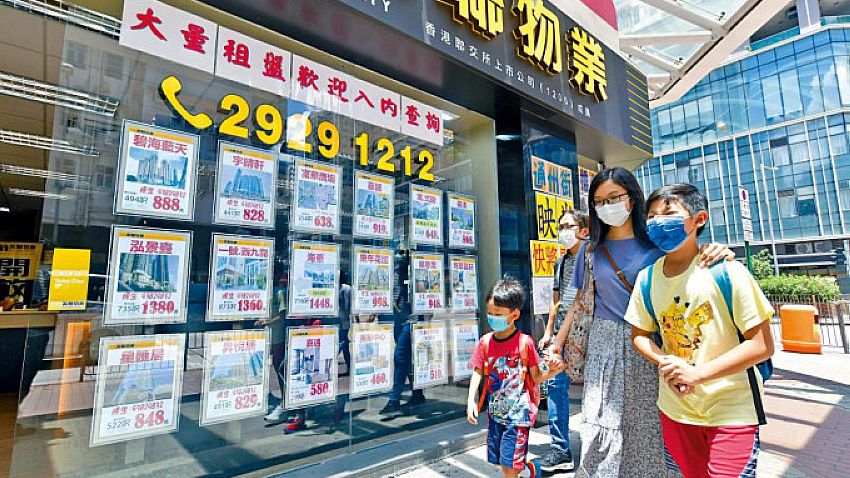
Hong Kong's housing is the most unaffordable in the world.
By Edgar Siu
Hong Kong is known for many things, such as its many tourist attractions, delicious cuisine, and being one of the biggest financial hubs in the world. However, when one thinks of Hong Kong housing, while there are many luxurious homes, with the high-rise apartment complexes and their many facilities for the residents, there are also the substandard, cramped “cage” homes that those who are less fortunate have no choice but to live in. And even despite those already poor conditions, sometimes families have to share those already poorly-accommodating homes with other families.
The main problems with such homes are the high prices and the lack of supply. Hong Kong has one of the highest population densities in the world. Combine that with the fact that a lot of Hong Kong’s land is undeveloped, and the result is that comfortable homes are barely available to the Hong Kong lower class, who are forced to choose between the homes they can afford (i.e., the small, subdivided flats allocated to them by the Government) or homelessness. Even opting for the Government’s allocated flats, residences are still not guaranteed. Again, because of supply, there is a waitlist that those who would like to receive housing allocation from the Government must apply and wait for.
Now, other than the obvious privacy issues that are unavoidable in these types of homes, what other issues can arise? For example, the recent coronavirus pandemic has brought one such problem to light. As people self-quarantine in order to keep themselves and others safe from the infectious virus, such things are difficult to do in a home where multiple people are crammed into a small room, with mostly shared areas and few physical barriers. And those are just the beginning of the health issues. One can only imagine the germs and bacteria that would grow and spread in an area regularly shared and used by multiple families, not to mention individual disabilities and other conditions that could be worsened.
Living in a confined space can also trigger people’s claustrophobia, and also does not give people adequate space to put their minds at ease and to stretch their physical bodies to keep themselves as healthy as they should be. We should be entitled to a place that we can return to after our long, hard days of work and stress (in other words, our homes). As it is, those who live in such homes are deprived of such a basic right.
Children who grow up in such households will also suffer without adequate room to grow up and explore. Those with disabilities are another group who will also have an especially difficult time living in inadequate residences, such as those with ADHD, asthma, or other types of disabilities.
Although I personally have grown up comfortably, living in an apartment with enough space for me to feel as free as one should in one’s home, after having had to self-quarantine twice (once in my own bedroom, and once at a designated quarantine hotel), I have also experienced living in a confined area for a week or two. Even though I was provided with air conditioning, electricity, food, and privacy in my own room, I struggled slightly to keep my mind at ease. Humans are not meant to be kept in confinement; we enjoy autonomy and exploring by nature, and cage homes go against this nature.
Despite this problem being so serious, and affecting many, why does it still continue to affect our society? Although I of course cannot say what is on the minds of those in the Government or the top people in the property giants, it seems likely that profits are the biggest motive behind the decisions regarding housing and usage of available land. With Hong Kong being one of the biggest financial hubs in the world, it is understandable for the Government to want to prioritise economic development, and the same can be said for the property giants. Since demand for housing will always be high, given Hong Kong’s high population density, simple economics tells us that by keeping the supply of housing low, its price will rise.
So, what possible solutions are there to this problem? John Lee, the newly appointed Chief Executive, has actually announced some measures his administration plans to take. He mentioned a “Public Rental Housing Advance Allocation Scheme”, in which those on the waiting lists would be able to move into units that they were allocated before the supporting facilities were completed if they were so elected, which would alleviate some pressure from the waiting list and those living in public housing at the time. Another plan, which would help to solve this problem more directly, was also mentioned by Lee: “The resumption of private land by means of the Land Resumption Ordinance will also be considered.” This means that there would be some chance that additional public housing would be built, hopefully allowing those in public housing to be granted additional space, possibly even at lower costs.
While this problem has persisted in Hong Kong due to how it has grown over the years and given its characteristics, under the new administration of John Lee, perhaps something will change in the near future to improve the living conditions of those in public housing: only time will tell.
The author is a Business Management and Modern Language student at the University of Manchester.
The views do not necessarily reflect those of Orange News.
Photo: SingTao
責編 | Stella
編輯 | Stella
編輯推薦
-
![]()
Opinion | Hong Kong People: Being Squeezed, or Not—Our Holiday Choice, and Why Staying in Hong Kong Can Be Just as Good
OPINION | 2026-01-02 12:18 -
![]()
Opinion | Hong Kong's Strategic Path: Adapting to Hainan's Free Trade Challenge
OPINION | 2025-12-29 10:44 -
![]()
Opinion | Hong Kong's Path Toward Alignment with National Goals
OPINION | 2025-12-18 16:15 -
![]()
Opinion | Legal Systems and Public Interest: Moving Beyond Comparative Analysis Toward Jurisprudential Reconsideration
OPINION | 2025-12-18 16:15 -
![]()
Opinion | Australia Leads on Social Media Age Limits: Valuable Lessons for Hong Kong
OPINION | 2025-12-16 17:54 -
![]()
Opinion | 3I Atlas: Reimagining Hong Kong’s STEAM Education Through Astronomy
OPINION | 2025-12-16 17:54





以巴衝突|美方宣布啟動停火第二階段 將建立技術官僚委員會管理加沙

施紀賢稱Grok涉色情「令人作嘔」 馬斯克否認Grok生成未成年裸照

「棋聖」聶衛平逝世享年74歲 曾代表中國首次擊敗日本超一流棋手

消委會|3款足部護理霜被檢出香料致敏物 1款含游離甲醛

極兔與順豐深化合作 相互持股涉資近83億

俄烏戰爭|特朗普:普京已經準備好達協議 澤連斯基是障礙

丹麥外相:與美國就格陵蘭問題存根本性分歧 將成立工作組繼續溝通